
DESIGN SMARTER. ANALYZE DEEPER. STAY AHEAD.
SCIA Engineer 2027 adds AI saving time along your workflow - from guided onboard to automatic flagging of critical results. The time-dependent analysis accurately tackles bridge and long-span concrete projects within one platform eliminating errors from data transfer. And the load takedown quickly determines load paths without running the full analysis and provides fast input for other specialists.
NEW KEY FEATURES AND ENHANCEMENTS IN SCIA ENGINEER 2027
Allplan Max
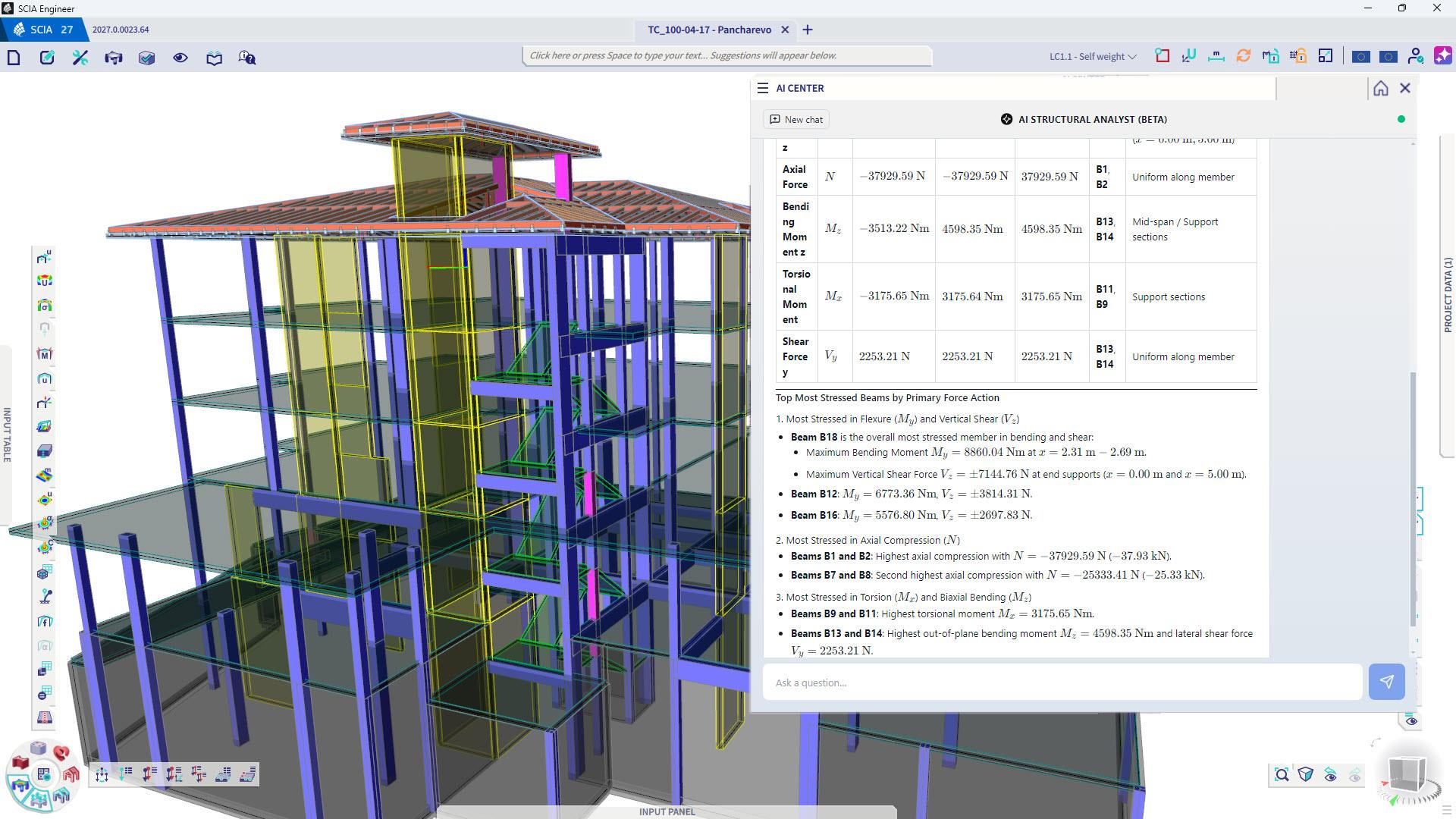
Learn faster with AI Coach, dive deeper with AI Structural Analyst
SCIA Engineer's AI Coach and AI Structural Analyst bring intelligent support directly into your workflow. AI Coach delivers in-context guidance that shortens onboarding for junior and occasional users, answering questions instantly and reducing reliance on support tickets or formal training. AI Structural Analyst automatically interprets raw internal forces, reactions, and deformations, flagging peaks, sign changes, and critical sections so engineers can spot what matters and reach reliable decisions faster. Together, they minimize the risk of overlooking critical values, cut evaluation time, and address the industry's growing skills gap — all without leaving the design environment. The result: less time spent training, waiting, or double-checking, and more time spent engineering with confidence.
Time-dependent analysis
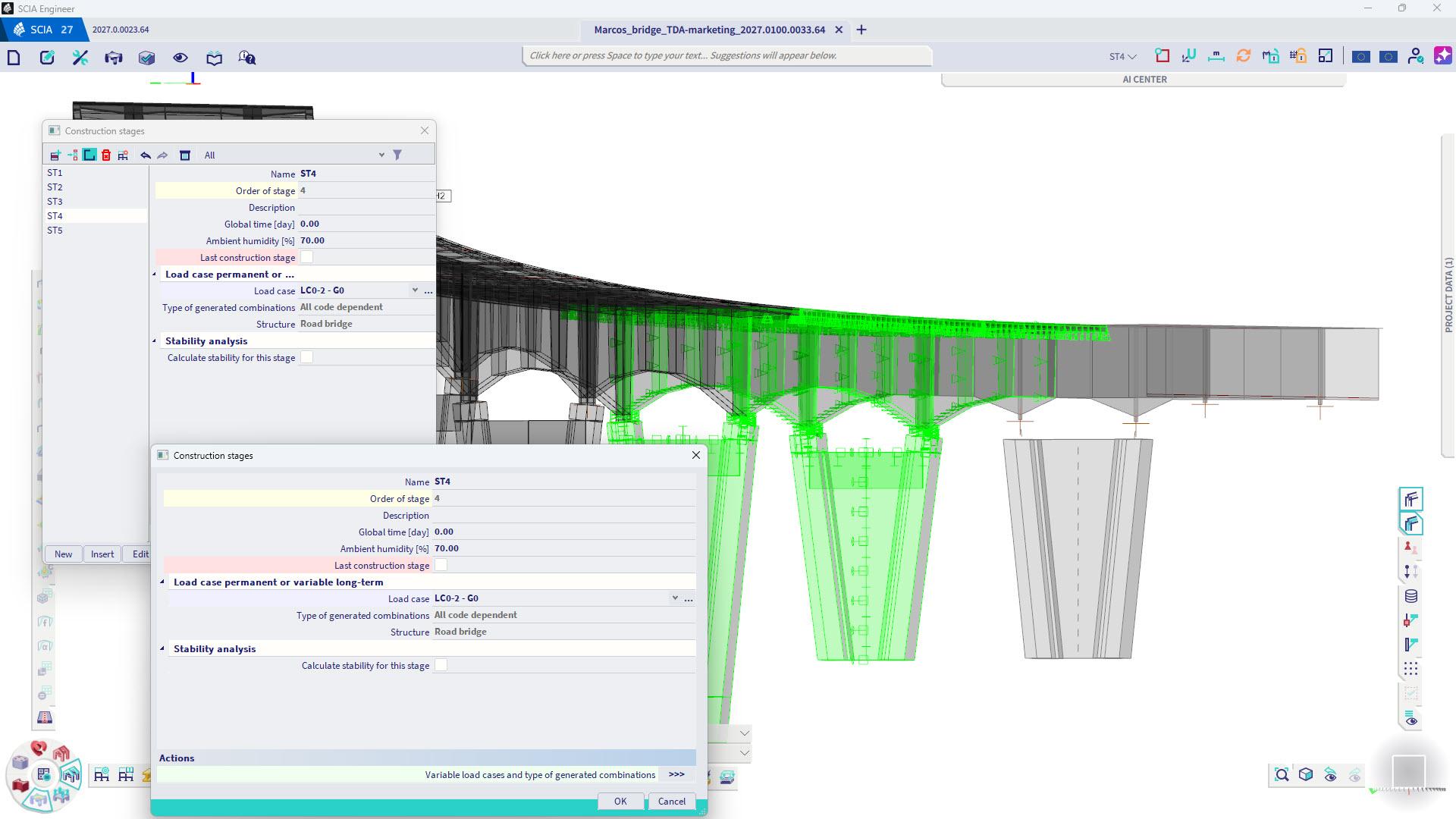
Accurate modeling of long-term effects in concrete
Time-Dependent Analysis lets engineers accurately capture creep, shrinkage, concrete aging, and prestress relaxation directly within SCIA Engineer, so long-term deflections, force redistribution, and crack risk reflect real structural behavior instead of short-term approximations. By correctly modeling force redistribution across construction stages — staged casting, composite action, post-tensioning — engineers get results that genuinely matter for bridges, transfer structures, and long-span or slender designs. There's no need to export data to third-party bridge tools, eliminating handoff errors and saving time. The result is a safer, more economical design that avoids oversized structures based on rough approximations, all while satisfying both short-term and long-term serviceability requirements in one workflow.
Load takedown
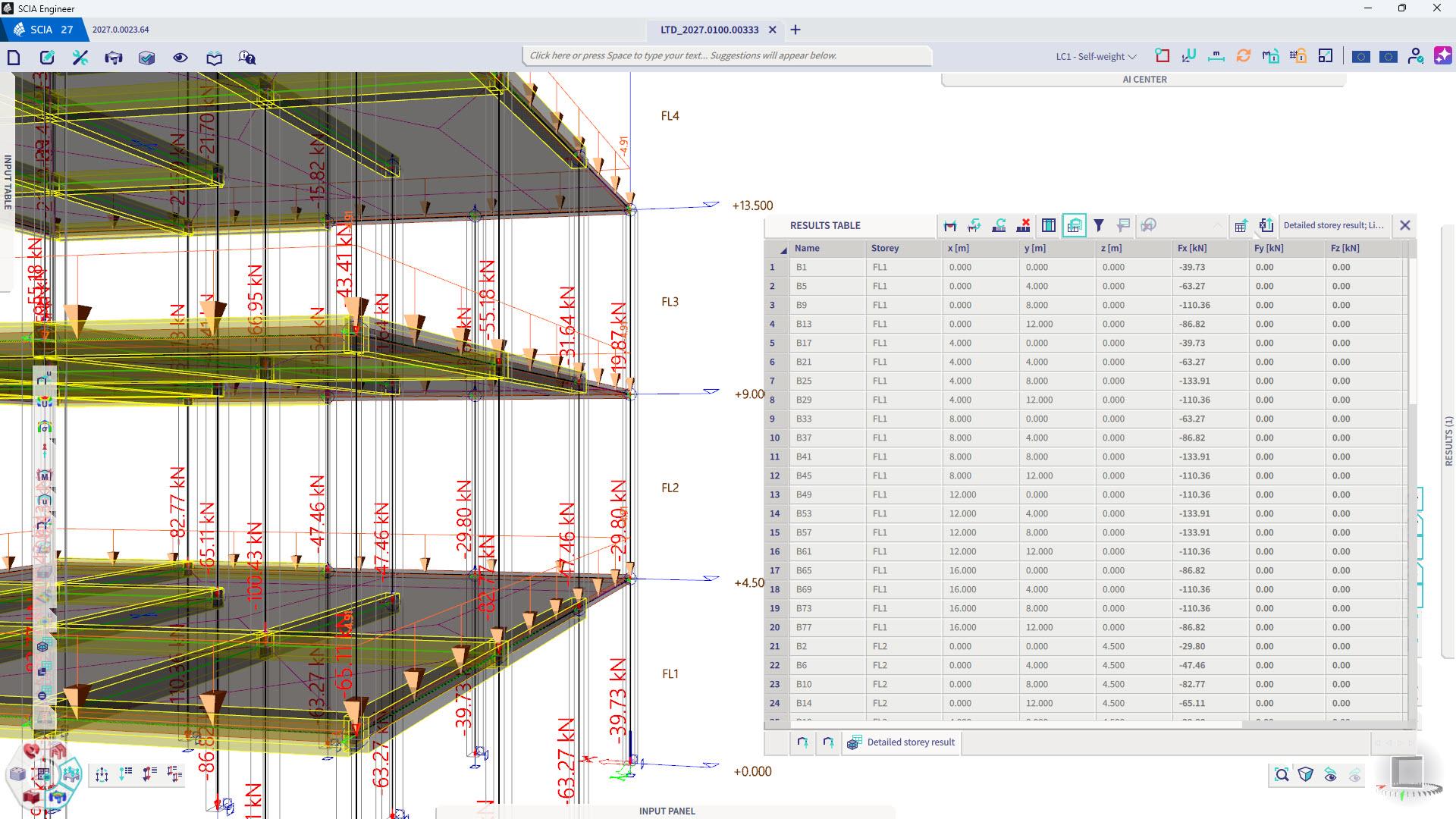
Load path verification from roof to foundation
Load Takedown Analysis automatically traces how gravity loads from roofs, floors, and walls travel down through the structure to its foundations, replacing error-prone spreadsheets with a fast, built-in solution. Engineers get clean, accumulated vertical loads per support and per level, giving accurate data for column, wall, and foundation design without manually tracing load paths. It also serves as an independent reasonability check on FEM reactions, catching modeling errors before they reach the foundation stage. Available early in the project, it helps size foundations and spot problem areas before detailed results are ready, saving time and ensuring a faster, cleaner handoff to foundation and geotechnical specialists.
Sub-combinations
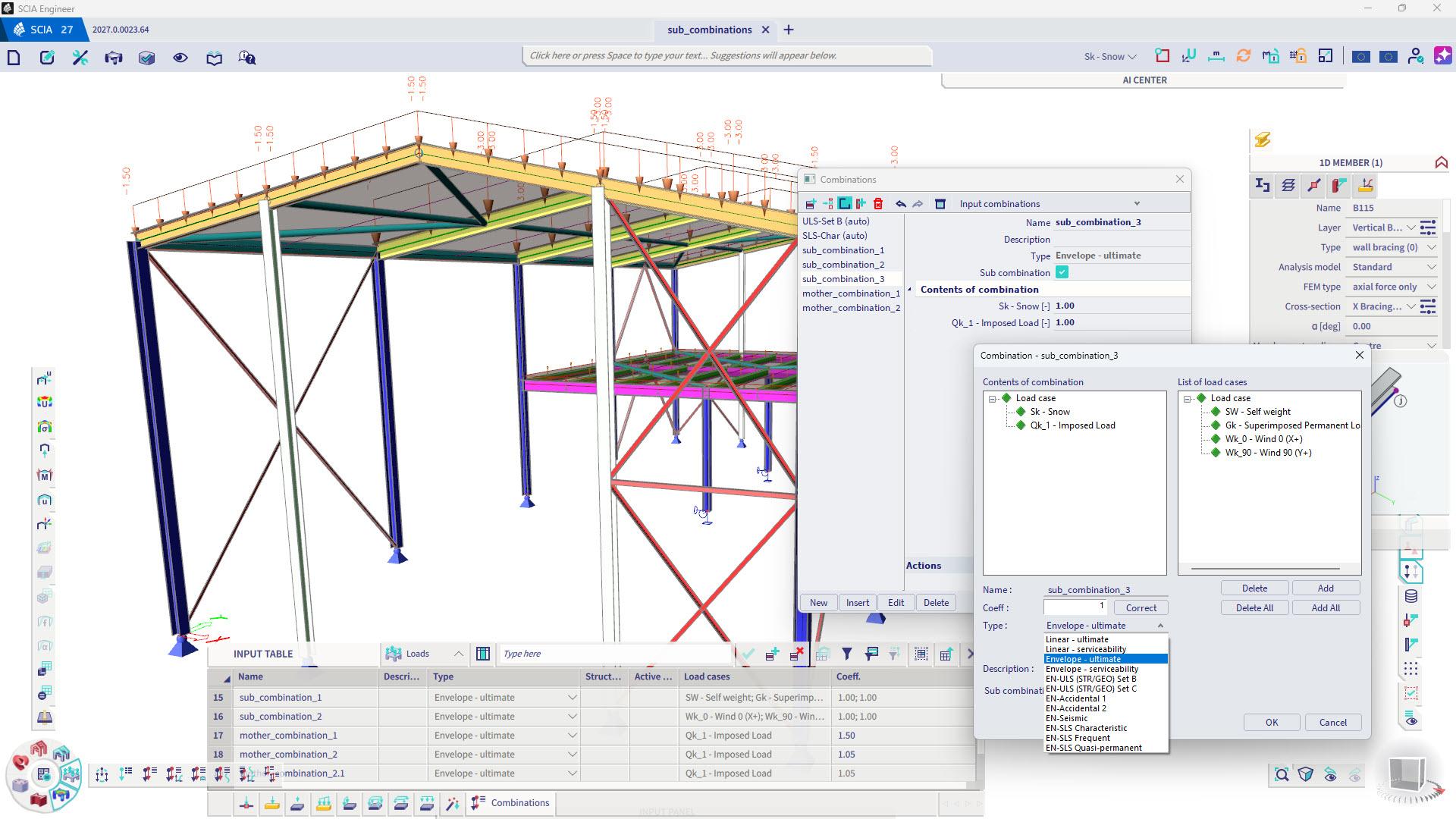
Flexible, streamlined load combination management
Sub-combinations give engineers greater flexibility to build custom load combinations for special cases where standard code-defined combinations fall short. By reducing the number of manual combinations required, the feature saves time when setting up load combinations across a project, while streamlining the workflow to eliminate manual errors. It's particularly valuable for bridge design, where managing combinations involving mobile loads can become complex — sub-combinations improve this management and contribute to a more efficient overall workflow in SCIA Engineer. The result is less manual work, fewer errors, and better control over complex loading scenarios throughout the design process.
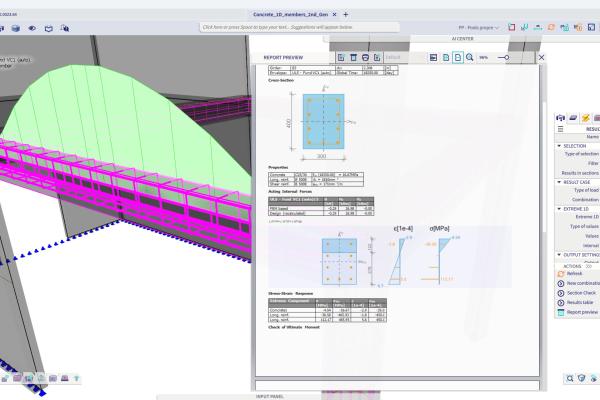
Concrete 2nd generation 1D checks EN 1992-1-1
Ahead of the 2028 Eurocode transition
SCIA Engineer now supports 1D checks for concrete under the 2nd generation of Eurocode EN 1992-1-1, giving engineers early access to the most significant update to European structural design standards in over two decades. Ahead of the mandatory 2028 transition, users can explore revised safety concepts, updated material models, and refined verification procedures, benchmarking current projects against both code generations to see where design outcomes may shift. This proactive approach lets firms validate workflows, adjust verification methods gradually, and build confidence with the new provisions within a familiar tool, avoiding compressed timelines and retraining under pressure once the codes become mandatory. It keeps engineers competitive and compliant as regulations evolve.
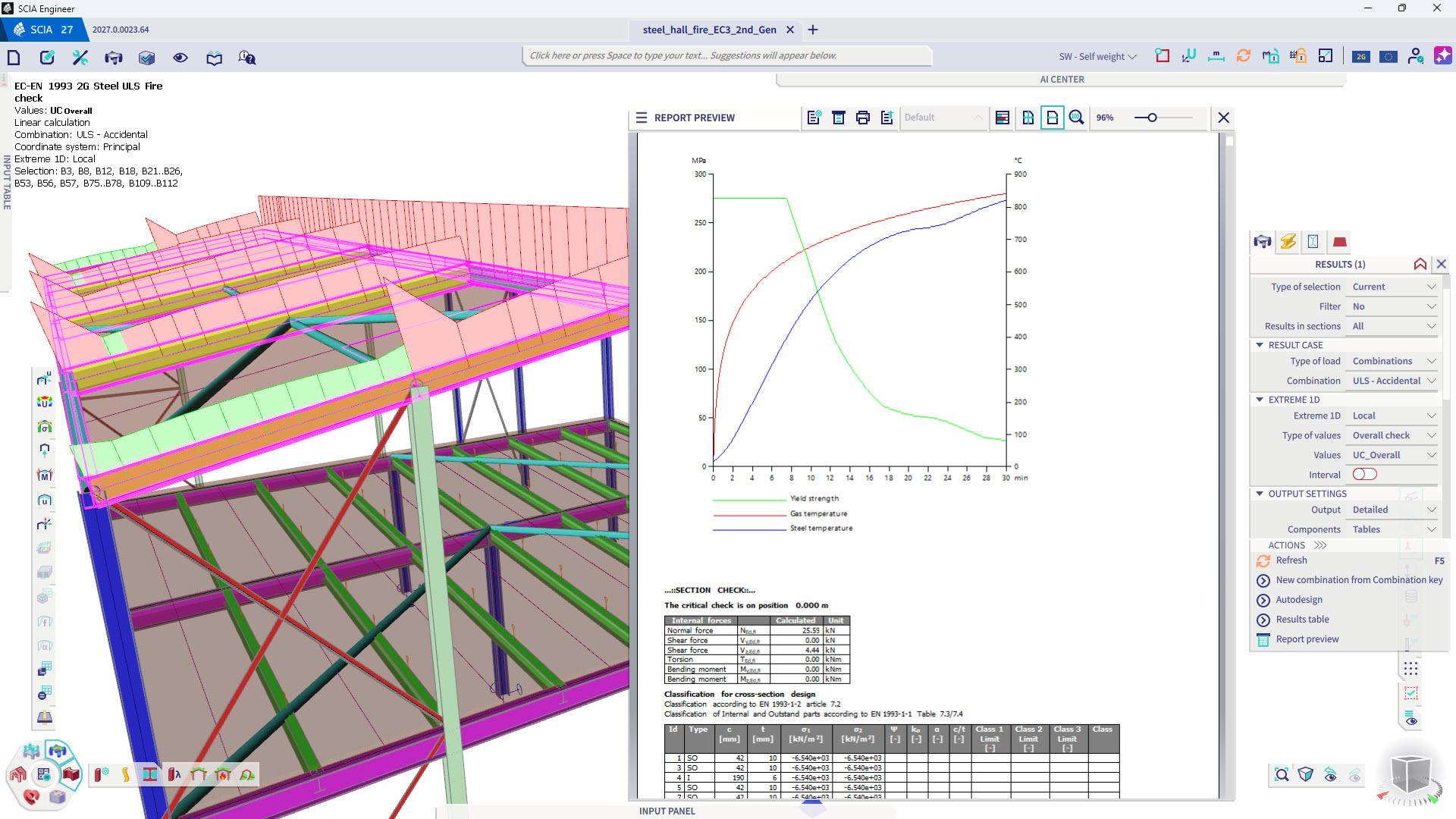
Steel 2nd generation fire design EN 1993-1-2
One workflow for serviceability, durability, and fire resistance
Building on the 2nd generation Eurocode steel design already introduced in SCIA Engineer 2026, this extension adds fire-resistance checks under EN 1993-1-2, including support for hot-dip galvanized steel — addressing a growing market need. Engineers can now perform both serviceability, durability, and fire resistance verifications within a single integrated workflow, without exporting data to third-party fire-design applications, eliminating transfer errors and saving time. As the 2028 mandatory transition to 2nd generation Eurocodes approaches, this early access lets firms validate fire design workflows, benchmark results against current provisions, and build confidence with the updated verification procedures well ahead of the deadline, all within a familiar, integrated tool.
DISCOVER ALLPLAN PORTFOLIO
Visit the main Allplan website to see the complete portfolio of Allplan products and discover how you may benefit from our comprehensive solution for the AEC industry - from first concept through detailed design and multidisciplinary planning to prefabrication and construction deliverables.


Want to try SCIA yourself?
Explore how our software and services can help you optimise your work and boost your productivity. Try it for yourself with a free 30-day software trial.